 PTTMSO Center3D-learning technology
MINISTRY OF SCIENCE AND HIGHER EDUCATION OF THE REPUBLIC OF KAZAKHSTAN
ABLAI KHAN KAZAKH UNIVERSITY OF INTERNATIONAL RELATIONS AND WORLD LANGUAGES

Republican Scientific and Methodological Conference “Teaching the Kazakh Language in the Era of Generative Artificial Intelligence: Methodological Transformation, Risks and Prospects”
★ 26.11.2026 · 11:00 · Republican Scientific and Methodological Conference ★
Ablai Khan KazUIRandWL · Department of Kazakh Philology
About the conference
Republican scientific and methodological conference "Teaching the Kazakh language in the era of generative artificial intelligence: methodological transformation, risks and development prospects". Organiser: the Department of Kazakh Philology of Ablai Khan Kazakh University of International Relations and World Languages.
- Generative AI and the linguodidactic foundations of teaching Kazakh;
- Kazakh in the digital space: corpora, large language models and the quality of AI-generated learning content;
- Developing listening, speaking, reading and writing skills with AI support;
- Assessment in the era of AI: validity, academic integrity and new formats;
- Teacher AI literacy, digital ethics and education policy.
karaev56.kz · zhanartay53@gmail.com
This website was created in honour of the conference with the help of neural networks. How AI removes routine is shown by the site itself.
AI in Teaching:five TTMSO tools (3D learning) and the NotebookLM neural network
Author: Zh. U. Kobdikova
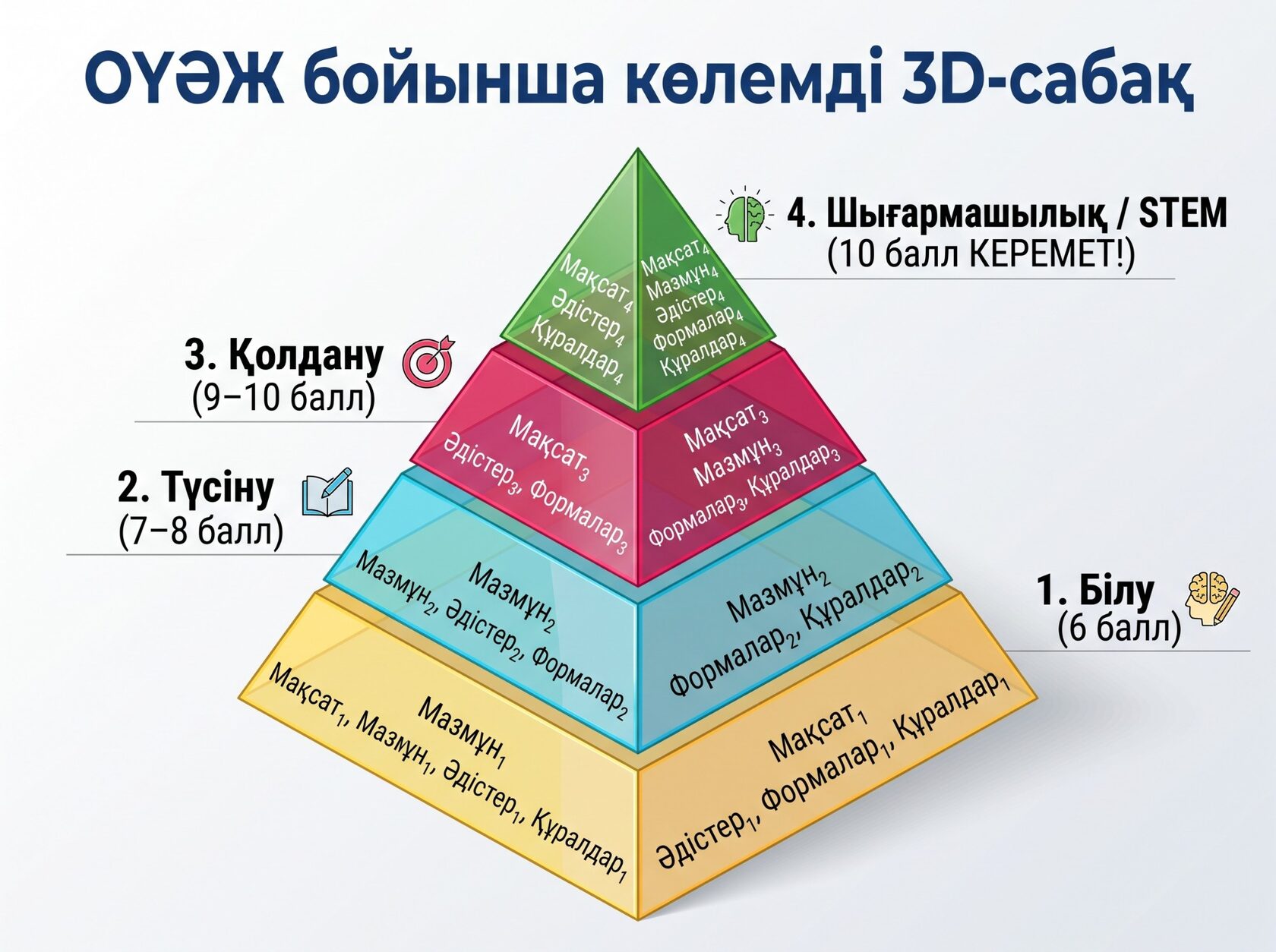
A clear model: artificial intelligence takes over the teacher's routine, and the time it frees goes to science, creativity and live conversation with students. Tasks and assessment are built on four levels, so the neural network does not replace the student's own knowledge.
What the programme gives you
Six things a teacher takes away and uses in the very next class.
Five TTMSO tools in the age of AI
Neural networks prepare the tasks, while the five tools show what the student did on their own and how the group is growing.
We will show the filled-in samples at the webinar.
Programme
Five modules. Each module prepares one part of your own course: tasks, assessment materials or an implementation plan.
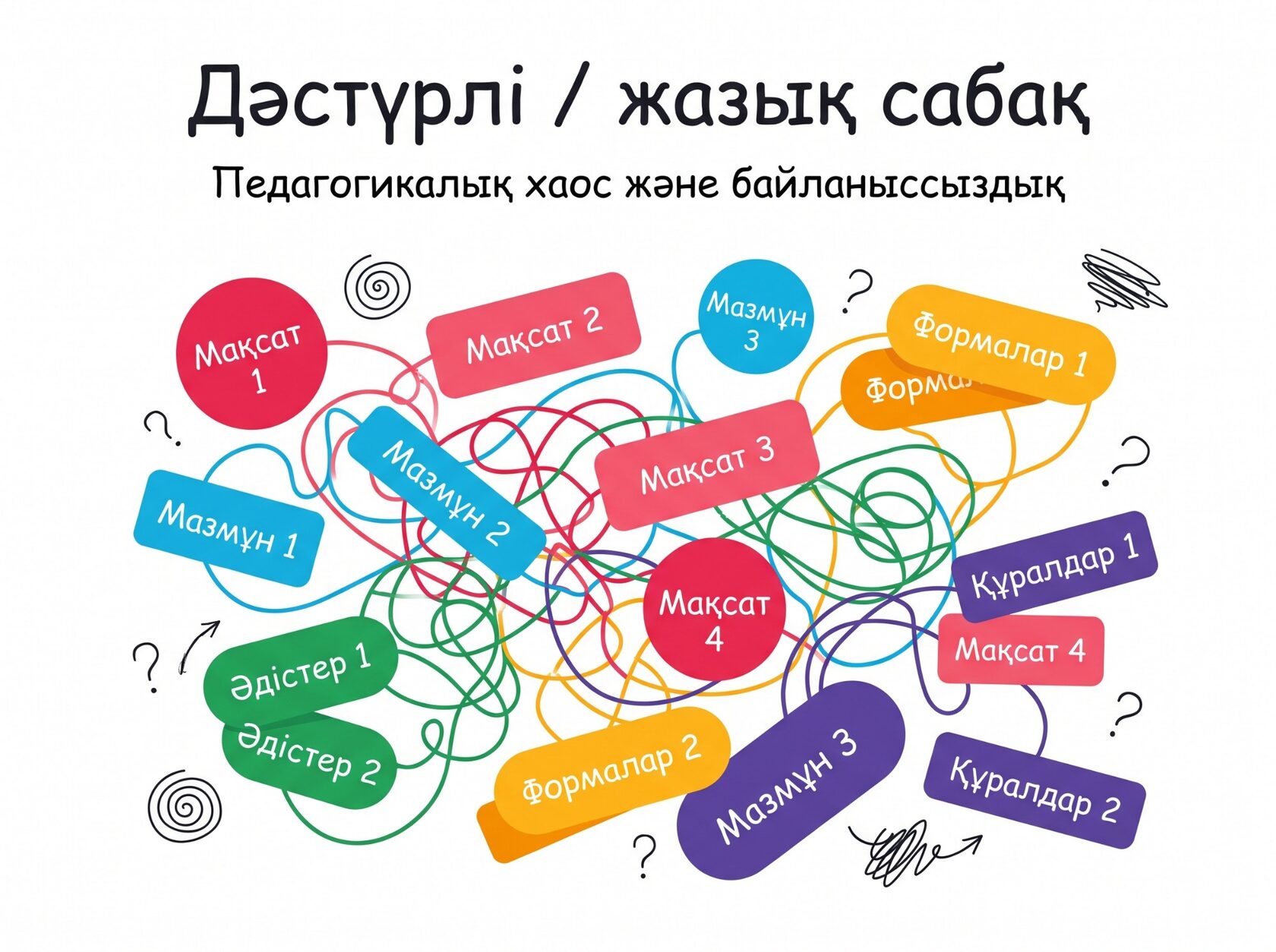
How the teacher's role changes when students freely use neural networks. In the traditional plan, aims, content, methods, form and tools lie "on one plane". In three-dimensional teaching they split into four "layers", and AI does not replace the student: at the first levels it is a participant in the lesson.
Tool 1: TURZUpload a lecture or a textbook chapter and get tasks of four levels with answer keys. Examples from the humanities, technical and natural science disciplines. Tests, mind maps, infographics and scripts on request.
Tool 1 + NotebookLMA ready-made text does not prove understanding. At the third and fourth levels we show how to check independence: real-life problems, a project, an oral defence. The Open Journal, the growth trajectory and monitoring of group quality.
Tools 2, 3 and 4Searching for and selecting literature, working with sources in NotebookLM, checking conclusions against the text, preparing scientific texts and talks. At the fourth level the student creates their own product. Academic integrity when the neural network is at hand.
Tool 1 + NotebookLMThe fifth tool: the diagram of growth in the number of students raised to higher levels and its calculation. A materials package for your subject and a personal plan for introducing AI.
Tool 5We agree the format, schedule and study document separately for university teachers. Write to us and we will choose a suitable option.
What NotebookLM does with your material
You upload a lecture, a textbook chapter or an article, and the neural network works from those sources. The teacher stays responsible for the content.
At the webinar we will show this on one of your own materials.
Articles for the conference
Three articles serve one idea: TTMSO and neural networks together free the teacher from routine, leaving time for science, creativity and live conversation with students, while four-level tasks show the learning result precisely. The articles are written in Kazakh.
Four-level tasks, the score addition method and the Open Journal are adapted for the university: levels 1–2 without AI, at level 3 AI is a checking tool, level 4 uses NotebookLM, and the result is converted to the 100-point Platonus scale. AI eases the teacher's routine and frees time for scientific and creative work.
Open the article (PDF)A model of four-level tasks, the structure of a 45-minute lesson and peer review. NotebookLM prepares the first version of the tasks, while the teacher checks the chemical accuracy of the finished material. The effect on preparation time and on students' project skills still has to be assessed in practice.
Open the article (PDF)The stages: identify a gap, analyse errors, correct them, reassess the result. The capabilities of PhET, Google Forms, Quizizz, LearningApps, ChatGPT and NotebookLM are combined with formative assessment and individual correction.
Open the article (PDF)The articles were prepared for the republican scientific and methodological conference of 26.11.2026. Full texts open by link.
Materials package: one topic as an example
From one lecture topic we built a full package with the help of a neural network. Below it is arranged by importance: first the finished result for the student and the teacher, then how it was made. Each material opens by its own link. The materials are prepared in Kazakh.
Finished result
How it was made
We will build the same package for your own subject together at the webinar.
What is confirmed by documents
- Reply of the Committee of Secondary Education of the Ministry of Education of the Republic of Kazakhstan dated 22.09.2026 No. ZT-2026-03815457: authorship of the technology is confirmed.
- Three copyright certificates for the works of Zh. A. Karaev and Zh. U. Kobdikova.
- The authors' monograph "The Technology of the Three-Dimensional Methodological System of Teaching: Theory and Practice".
- The technology is also used in universities.
Authors of the technology
- Zh. A. Karaev, co-author of the 3D-learning technology (TTMSO).
- Zh. U. Kobdikova, Doctor of Pedagogical Sciences, Professor, co-author of the technology.
Frequently asked questions from university teachers
Do I need experience with neural networks?
No. We start from the first click: we show how to upload your own study material and get tasks.
Does it work for my subject?
Four-level tasks are built from your material, so the method does not depend on the subject. This can also be seen in examples from other subjects.
A gift in honour of the conference
The authors give this page to Ablai Khan Kazakh University of International Relations and World Languages in honour of the conference. The author will keep adding to the content of the page at colleagues' requests. If you have questions, write to the authors.
2. Какие данные. Имя, номер WhatsApp и ответы, которые вы оставляете в форме на сайте karaev56.kz.
3. Зачем. Чтобы связаться с вами, ответить на вопрос, подобрать цену курса и прислать руководство и ссылку на вебинар. Рассылок без вашего согласия не делаем.
4. Как храним. Данные приходят нам в мессенджер и в систему заявок конструктора сайтов Тильда. Доступ — только у сотрудников, которые работают с заявками. Храним, пока это нужно для ответа и договора, и удаляем по вашей просьбе.
5. Кому передаём. Никому, кроме сервисов, без которых заявка не дойдёт: конструктор сайтов и мессенджер. Не продаём и не публикуем.
6. Ваши права. Вы можете узнать, какие данные у нас есть, исправить их или попросить удалить — напишите на zhanartay53@gmail.com или позвоните +7 775 651-88-99.
7. Согласие. Оставляя заявку, вы соглашаетесь на обработку данных на этих условиях в соответствии с Законом РК «О персональных данных и их защите».
Дата: 20.10.2026.